A bathroom makeover doesn’t always require a full renovation. Sometimes, changing the surfaces, improving the layout, or introducing a more considered color scheme can make the room feel entirely different. If you are planning a refresh, Go Tiles can be a useful starting point when considering the right bathroom tiles for your space. From understated neutrals to more distinctive patterns, the right choice can shape both the room’s appearance and atmosphere.
Begin With the Overall Style
Before choosing individual products, consider the look and feel you want your bathroom to have. A clean, contemporary space may benefit from simple lines, neutral colors, and understated finishes, while a more traditional bathroom could work beautifully with softer tones, classic shapes, and decorative details.
Also consider how the bathroom connects with the rest of your home. Choosing colors and materials that complement nearby rooms can make the overall interior feel more cohesive. Rather than following every current trend, focus on a style you’ll enjoy over time.
Choose Tiles That Suit the Space
Tiles are one of the most noticeable elements in a bathroom, so selecting them carefully can have a significant impact. Large-format tiles can create a streamlined look and reduce visible grout lines, making them particularly useful when you want a calm, uncluttered finish.
Smaller tiles can bring more texture and visual interest. Metro-style tiles, geometric designs, and mosaic patterns can work well as feature details, whether used across a complete wall or in a smaller area such as behind a basin.
When choosing bathroom tiles, consider more than color alone. Think about the finish, texture, maintenance requirements, and how the tiles will interact with lighting. A glossy surface can reflect light around a room, whereas a matt finish often creates a softer, more understated appearance.
Make a Feature of One Wall
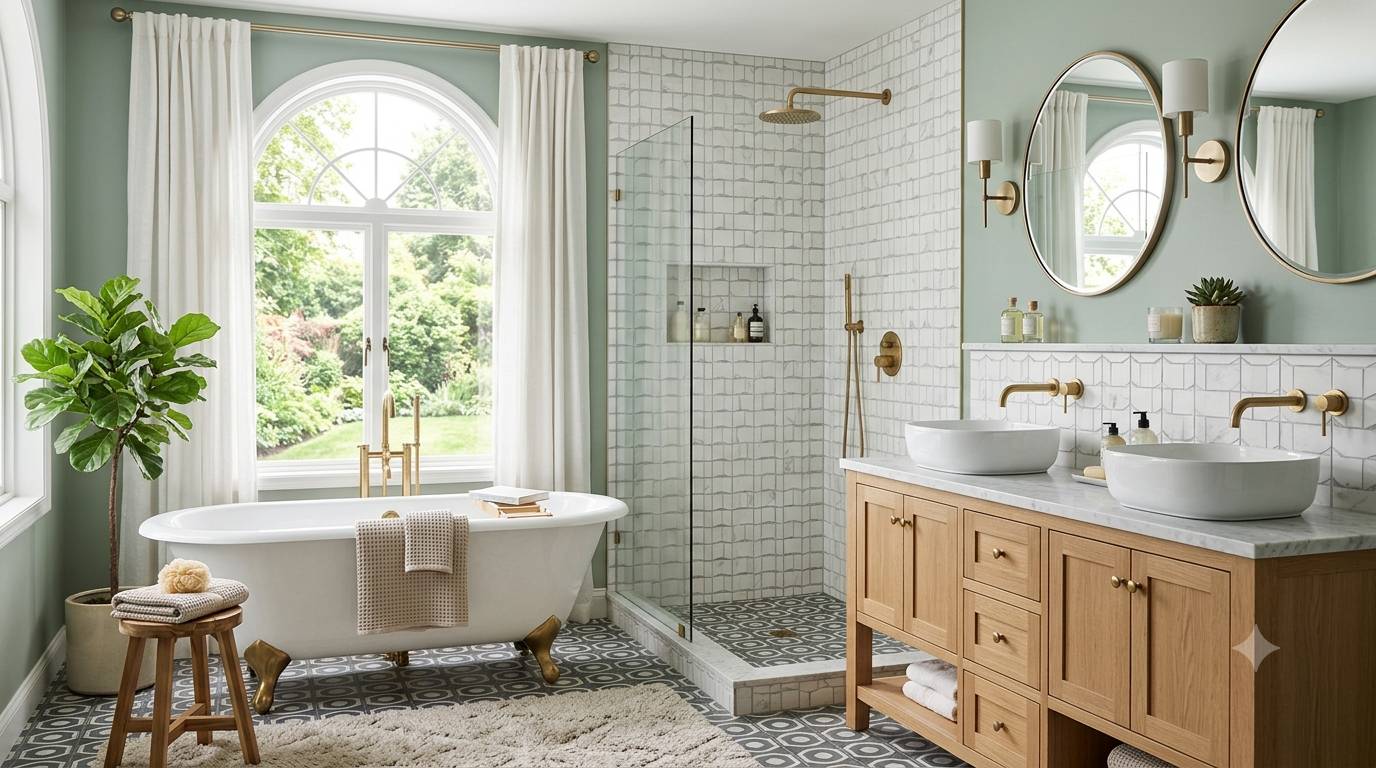
If you want to introduce personality without overwhelming the room, a feature wall can be an effective approach. The wall behind the bath, shower, or vanity unit is often a natural place to create a focal point.
You could use a contrasting color, patterned tiles, or an interesting arrangement to draw attention to the area. The rest of the bathroom can remain relatively simple, allowing the feature surface to provide visual impact without making the space feel busy.
A feature wall can also help define different zones in a larger bathroom. Used thoughtfully, it gives the room structure while adding character.
Think Carefully About Color
Colour can completely change how a bathroom feels. Pale shades such as white, cream, soft grey, and muted beige can create a bright, relaxed environment. Deeper shades, meanwhile, can introduce drama and make a bathroom feel more intimate.
You do not necessarily need to commit to a strong color across the entire room. A neutral base, paired with darker flooring, colored wall tiles, or carefully selected accessories, can add contrast while keeping the overall design balanced.
If natural light is limited, consider how your chosen colours will look throughout the day. Samples help because a shade can look very different under natural and artificial lighting.
Balance Style With Practicality
A beautiful bathroom still needs to work well in everyday life. When planning your makeover, consider how much storage you need, where you’ll keep towels, and whether there is enough room to move comfortably around the main fixtures.
Materials should also suit a bathroom environment. Surfaces should be practical to maintain, and flooring should provide appropriate grip in a room where water is frequently present.
Good design balances appearance with functionality. A visually impressive bathroom that lacks storage or is hard to clean can quickly become frustrating, so pay attention to practical details from the start.
Use Lighting to Enhance the Design
Lighting is often overlooked during bathroom makeovers, yet it can influence everything from colour to atmosphere. A combination of general lighting and focused illumination around areas such as mirrors can make the room more functional.
Warm lighting can create a relaxing atmosphere, while brighter, clearer illumination can be useful around a vanity. If possible, make the most of natural light by keeping windows unobstructed and using finishes that help distribute light throughout the room.
Add Character With Finishing Details
Once you’ve chosen the main surfaces and fixtures, smaller details can bring the design together. Mirrors, taps, handles, storage baskets, towels, and accessories can all contribute to the final look.
Try to repeat selected finishes rather than introducing too many competing materials. For example, matching metal details across taps, handles, and lighting can create a more cohesive appearance.
Plants can also add softness and a touch of color, provided the chosen varieties suit bathroom conditions.
Conclusion
A successful bathroom makeover is not simply about making the room look attractive. It should reflect your taste while supporting the way you use the space every day. Start with the overall style, choose surfaces carefully, consider lighting and color, and make practical decisions alongside aesthetic ones.
With a thoughtful approach, even relatively small changes can give a bathroom a fresher, more considered feel. The key is to create a space that looks good now but remains comfortable, functional and enjoyable long after the makeover is complete.